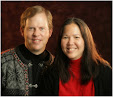
Here's some of our lessons learned from researching clinical trials for our daughter. There are many clinical trials and none are equal. Most oncologists are overworked and cannot know every clinical trial - but no doubt about it, though clinical trials have saved lives (look at childhood leukemia, GIST, etc.). Although clinical trials can save, they can also cause a lot of toxicity and inadvertently cause more harm than benefit, so it pays to do your research!
General Tips:
1. Learn what you can about the biology of your type of cancer. If you have a little science background you may be able to find out which drugs may work better or worse. For alveolar soft part sarcoma, we know that it is a vascular tumor (possible candidate for anti-angiogenesis agents), has relatively slow cell cycle dividing time (so agents dependent on rapid cell division or cycling less likely to help). There may also be different biologies early in the course of disease or with involvement of certain organ systems.
2. Do no harm. If your particular cancer type has patient forums or registries, it may be able to possible to find out what side effects others have had with the drug or class or drugs. In some cases therapies can worsen cancer progression or cause such serious side effects and not extend life that it isn't worth trying. I visited renal cancer forums before our daughter started Sutent, and often visit places like sarcomaalliance.com or cancercompass.com.
3. Look for successes. The best information will be if a particular drug has had success in another patient with your type of cancer, but there will be variables regarding that person's age, stage of cancer, involvement of different organs, prior treatment, and individual molecular make-up, that you can't control for or know, so nothing is ever 100%. What works for someone else may not work for you, and what works for you may not work for someone else. But regardless, with those caveats, you can find a promising drug early through research this way, and most cancer families who post on forums are happy to be contacted about their positive experiences and share information.
Even if you don't have enough successes in your type of cancer, there are often families of similar cancers that may provide helpful information about our own. Searching for review papers and your cancer might help you learn related cancers (and cancer trials that you can search for more information.
Sites for Clinical Trials Searches:
Be aware that you may be limiting your options by only putting in the name of your type of cancer. For instance, there are very few options that may come up with a search for alveolar soft part sarcoma, so I also look under soft tissue sarcoma and even solid tumor studies. In some cases a drug you want may be offered under a general category like recurrent or refractory malignancies or metastatic cancer. If you are dealing with a rare cancer, many clinical trials descriptions won't list your particular type, but it still may be a good drug and effective.
1. ClinicalTrials.gov : http://clinicaltrial.gov/ct2/home
2. National Cancer Institute Clinical Trials: http://www.cancer.gov/CLINICALTRIALS
3. Individual Cancer Therapy Centers - Most cancer trial sites will have their own list of clinical trials that they are enrolling. There has been a trend for more cancer trials to be conducted in buildings away from big hospitals and universities. For instance, in the Los Angeles area for sarcoma, I might check the trials page at Premiere Oncology (http://www.premiereoncology.com) and Sarcoma Oncology (http://sarcomaoncology.com/). UCLA is better known for its surgery for sarcoma, but some clinical trials are listed at its Jonsson Cancer and Children Hospital of LA pages.
Next Level of Investigation
1. After I find possible drugs I want to learn more from, I will often search for information about the success of the drug and side effect profile at a large scientific cancer meeting. For sarcoma, good sites are ASCO (http://www.asco.org/, American Society of Clinical Oncology) and CTOS (http://www.ctos.org/) because they often put the slides online after the meeting is over. Because we are dealing with a rare cancer, I look for news about ASPS, but also search related sarcomas and unrelated but similar cancers (e.g. vascular cancers like renal, melanoma, lung, breast) to look for promising agents with low toxicity.
2. I look through patient forums for others who may have tried the drug. It may tell me about the day-to-day experiences of the drug and possible severe side effects. Quality of life is important.
3. Finally, I go to the drug company's site to find out more information about the drug. I know some of this is advertising, but usually more information can be find under "Investors" links. Early information about preliminary data is often listed, and webcasts are often provided (for investors) that can provide access to data that won't be published for months or a year. Sometimes the SEC report will be there (or somewhere else on the Internet) and that also may trigger alerts for side effects or promising benefits. Because I have a scientific background, I often read all I can on a drug before our daughter tries it. That includes basic science data. Cancers are nasty tenacious things - and more often than not they will require multiple molecular hits to be killed. As a result, growth or appearance of a new tumor is not always an indicator that a drug hasn't worked at all - it may just mean the cancer has mutated to overcome its latest challenge, and so something new needs to be used. Often even if you look at very promising basic science data, the tumor kill is not 100% - but reducing tumor burden is not a trival thing...it can make other therapies more effective or give the body's immune system a better chance of fighting against the cancer.
Exceptions
When looking at a clinical trial, you may want to know that it's possible to ask for exceptions. It is much easier to ask to amend an existing protocol than to create an entirely new one. Also it's easier to ask for an exception once you're in the trial than when you're on the outside looking in.
The exceptions we were able to obtain at entry:
- age of entry (our daughter was only 10 years old; the youngest age on the protocol was 13)
- measurable disease (measurable disease is 1 cm, our daughter was below the cut-off, but we were able to appeal and gain access to the medication as a "non-evaluable case")
Exceptions we were able to obtain after entry:
- waiver of pharmacokinetics study which require multiple blood draws (she had terrible IV access)
- waiver of PET scans for monitoring (our initial PET was so low in activity, unreliable to monitor...we didn't want to expose her more to radiation than we needed)
- substitution of MRIs for CTs for abdomen and pelvis (reduce radiation exposure)
- petition to re-enter study after left to have surgery on one lung (we were very worried about them not letting us back in because we voluntarily left the study when some of her lung nodules increased in size; 2 nodules showed evidence of chemotherapeutic effect though, and this likely helped our request to resume the drug0
- petition to stay on medication after trial ended (this is common if the medication seems to help)
** We were told that we had received an extraordinary number of exceptions and we are grateful for this. But wanted to share this information. Chief medical officers and clinical trial coordinators are people and they want to help patients with cancer, but also have to abide by rules and regulations, the needs of their company, etc. There is no harm in asking.
FYI Compassionate Use: Companies are very reluctant to give medication out on a compassionate use basis. They prefer to collect data in a research trial. Companies will only give out drug on a compassionate use protocol if it is at Phase III trial stage - that is there is sufficent proof that it is effective. If you want to request compassionate use, be aware that companies are besieged by people all the time - and their standard answer is no. More effective appeals (from what people have told us) are from your physician, build a case for the drug in a succinct way (not emotional), and convey the idea that the patient has serious enough disease to warrant the medication, but is not so ill that he or she is terminal or likely to die very soon. It is a delicate dance, but that is the advice we have heard. Companies do not want to give their drugs out for free and have people die soon after. It could give their drug a bad name - and make it less like to make it to approval.
Saturday, January 24, 2009
Friday, December 19, 2008
Rules for Surviving Cancer
There's an interesting book called Deep Survival that looks at what traits or actions survivors of life-threatening experiences have in common. The author seems to be writing from an non-religious perspective, so it might be helpful taking this into account.
His findings are helpful though, and to religious folk as well as non-religious. Gonzales' 12 Rules of Survival are:
1. Perceive and Believe - or recognize the life-threatening situation and take action to do what you are able to help yourself.
2. Stay Calm.
3. Think, Analyze, Plan.
4. Take Correct, Decisive Action.
5. Celebrate Your Success.
6. Be a Rescuer, Not a Victim.
7. Enjoy the Survival Journey.
8. See the Beauty.
9. Believe You Will Succeed.
10. Surrender.
11. Do Whatever is Necessary.
12. Never Give Up.
There's a lot that applies to cancer families - the parents as well as children. As Christians facing serious life-threatening situations, we may struggle with the question - what would God have us do? Do we surrender? Do we fight?
The answer may be different at different times, but we should remember God always leaves lines of communication open to us. And God does like to work his love, rescue, and healing through other people so that we should seek help where and when we can. We should be prepared to think and work tirelessly if that is what we are called to do, or surrender all if that is our calling.
Endurance is one of the most difficult aspects in this cancer journey, so I enjoyhed seeing the rule of Celebrate Your Success (or celebrate God's mercy?) and See the Beauty included in the list, although I would substitute Find Joy for the latter.
Just before Christmas break, our daughter chose an assignment to write a paragraph on How to Survive in the Wilderness and I gave her the Gonzales article to read. This was what she wrote:
"Many people who have experienced life threatening situations in the wilderness have been able to survive because of their ability to remain calm and put their faith in God. God calmed them down and made them realize what they needed: food, water, and shelter. In Laurence Gonzales' study of survival he discovered men and women were able to survive by not panicking. They found out the good in their situation and were able to think about essentials: food, water, and shelter. Even through hard times, people like Debbie Kiley survived. She was trapped on a raft after her ship sank in a hurricane. She kept herself encouraged by looking at the beauty in the sky. Corrie Ten Boom said, "Never be afraid to trust an unknown future to a known God."
What she added to Gonzales' rules was the recognition of God's goodness helping us live.
His findings are helpful though, and to religious folk as well as non-religious. Gonzales' 12 Rules of Survival are:
1. Perceive and Believe - or recognize the life-threatening situation and take action to do what you are able to help yourself.
2. Stay Calm.
3. Think, Analyze, Plan.
4. Take Correct, Decisive Action.
5. Celebrate Your Success.
6. Be a Rescuer, Not a Victim.
7. Enjoy the Survival Journey.
8. See the Beauty.
9. Believe You Will Succeed.
10. Surrender.
11. Do Whatever is Necessary.
12. Never Give Up.
There's a lot that applies to cancer families - the parents as well as children. As Christians facing serious life-threatening situations, we may struggle with the question - what would God have us do? Do we surrender? Do we fight?
The answer may be different at different times, but we should remember God always leaves lines of communication open to us. And God does like to work his love, rescue, and healing through other people so that we should seek help where and when we can. We should be prepared to think and work tirelessly if that is what we are called to do, or surrender all if that is our calling.
Endurance is one of the most difficult aspects in this cancer journey, so I enjoyhed seeing the rule of Celebrate Your Success (or celebrate God's mercy?) and See the Beauty included in the list, although I would substitute Find Joy for the latter.
Just before Christmas break, our daughter chose an assignment to write a paragraph on How to Survive in the Wilderness and I gave her the Gonzales article to read. This was what she wrote:
"Many people who have experienced life threatening situations in the wilderness have been able to survive because of their ability to remain calm and put their faith in God. God calmed them down and made them realize what they needed: food, water, and shelter. In Laurence Gonzales' study of survival he discovered men and women were able to survive by not panicking. They found out the good in their situation and were able to think about essentials: food, water, and shelter. Even through hard times, people like Debbie Kiley survived. She was trapped on a raft after her ship sank in a hurricane. She kept herself encouraged by looking at the beauty in the sky. Corrie Ten Boom said, "Never be afraid to trust an unknown future to a known God."
What she added to Gonzales' rules was the recognition of God's goodness helping us live.
Sunday, June 8, 2008
Make-a-Wish, Service / Support Animals, and Cancer Kids
Any child with a life threatening illness may qualify for the program. The child's condition need not be terminal. A child is encouraged to make 2 wishes (a back up wish, should the first not be available, and I think usually there are two volunteers assigned to a Make-a-Wish child and their family.
If you are on the fence, call the foundation and see what they do. They are a wonderful group of volunteers and they really do neat things for these kids. Karina was so happy to make a wish (and even think about making a wish) at that point, because there was an incredible drudgery of painful procedures, things she had to do, and bad news from doctors. Make-a-Wish allowed us to
Karina wished for a puppy (a Pomchi puppy, after much research...these dogs are also hypoallergenic), and it is amazing how much that little sweet dog has lifted our spirits. Of course, a child is allowed to make a wish for anything (although they are warned some wishes may not be able to be granted, and one cannot wish for more wishes). Apparently 75% of kids wish to go to Disneyland or Disney World.
We were assigned 2 volunteers who met with us and also surprised us with little gifts and surprises throughout the "wish experience." Karina was able to have a puppy shopping spree at Petco and a puppy pizza party at her school.
Our puppy is always there to comfort her now and it has even been such a boost to everyone's spirits just to watch Teka's antics, walk the puppy and play with the puppy instead of just pouring over cancer reports or thinking about what the next tests will be. Karina has had difficult blood access and the pain from multiple pokes, IVs, etc. has been the hardest for her. It has been so wonderful being able to take Teka along with her (though usually waiting in the car...only on cool days). Teka really has been able to help her endure everything with greater ease.
But we also wanted to post on this because we found out additional information and links that some of you may find helpful. Because of updates in federal guidelines regarding the definition of service dogs, cancer families benefit:
From the Federal Register On Service Dogs:
"The 1996 DOT guidance document defines a service animal as ‘‘any guide dog, signal dog, or other animal individually trained to provide assistance to an individual with a disability. If the animal meets this definition, it is considered a service animal regardless of whether it has been licensed or certified by a state or local government.’’ This document refines DOT’s previous definition of service animal 2 by making it clear that animals that assist persons with disabilities by providing emotional support qualify as service animals and ensuring that, in situations concerning emotional support animals, the authority of airline personnel to require documentation of the individual’s disability and the medical necessity of the passenger traveling with the animal is understood."
The difference this makes is that a service dog can accompany a child into the hospital, on planes (without a pet fee because service animals are not considered pets), and in hotels or other settings that have a "no pets allowed" policy.
Not surprisingly, if parents bring a service animal with a "no pets" policy, they should be prepared to have documentation. We print a copy of the Federal Register document (with the relevant definition of service dogs highlighted), and have a copy of a document registering Teka as a service / emotional support dog from her veterinarian, as well as a prescription from one of her doctors that essentially says: "** suffers from a serious medical disorder that affects her quality of life and emotional health. I have prescribed a service dog to assist her." We also obtained appropriate patches from SitStay.com that identify her as a service dog and therapy dog. She already has a harness.
For other reading:
Assertive Cancer Patient Blog: The Cancer Dog
Right to Emotional Support Animals in "No Pet" Housing
Labels:
animals,
make-a-wish
Saturday, September 29, 2007
C.S. Lewis on Cancer
I've been reading C.S. Lewis' letters and came across this letter to a friend:
"...I know all the different ways in which it gets one: wild hopes, bitter nostalgia for lost happiness, mere physical terror turning one sick, agonised pity and self-pity. In fact, Gethsemane...what helped Joy and me through it was 1. That she was always told the whole truth about her own state. There was no miserable pretence. That means that both can face it side-by-side, instead of becoming something like adversaries in a battle-of-wits. 2. Take it day by day and hour by hour (as we took the front line). It is quite astonishing how many happy- even gay - moments we had together when there was no hope. 3. Don't think of it as something sent by God. Death and disease are the work of the Devil. It is permitted by God: i.e. our General has put you in a fort exposed to enemy fire. 4. Remember other sufferers. It's fatal to start thinking 'Why should this happen to us when everyone else is so happy.' You are (I was and may be again) one of a huge company. Of course we shall pray for you all we know how. God bless you both,
Yours, C.S. Lewis"
I also helpful to read C.S. Lewis' comments about the differences between the acts of God and acts of Satan. He noted that all acts of creation and creativity are ultimately from God. When Satan acts, he can only corrupt or destroy.
"...I know all the different ways in which it gets one: wild hopes, bitter nostalgia for lost happiness, mere physical terror turning one sick, agonised pity and self-pity. In fact, Gethsemane...what helped Joy and me through it was 1. That she was always told the whole truth about her own state. There was no miserable pretence. That means that both can face it side-by-side, instead of becoming something like adversaries in a battle-of-wits. 2. Take it day by day and hour by hour (as we took the front line). It is quite astonishing how many happy- even gay - moments we had together when there was no hope. 3. Don't think of it as something sent by God. Death and disease are the work of the Devil. It is permitted by God: i.e. our General has put you in a fort exposed to enemy fire. 4. Remember other sufferers. It's fatal to start thinking 'Why should this happen to us when everyone else is so happy.' You are (I was and may be again) one of a huge company. Of course we shall pray for you all we know how. God bless you both,
Yours, C.S. Lewis"
I also helpful to read C.S. Lewis' comments about the differences between the acts of God and acts of Satan. He noted that all acts of creation and creativity are ultimately from God. When Satan acts, he can only corrupt or destroy.
Labels:
C.S. Lewis,
faith
Sunday, September 16, 2007
Give Us This Day Our Daily Bread...
I've been reading my way through C.S. Lewis' collected letters, and I enjoyed reading this letter of consolation and encouragement to a friend:
"I am sorry to hear that your (temporal) news is so grim. Your spiritual news is perhaps better than you think. You seem to have been dealing with the dryness (or 'the wall' as you well name it) in the right way. Everone has experienced it or will...It is v. important to remember that Our Lord experienced it to the full, twice-- in Gethsemane when He sweated blood, and the next day when he said 'Why hast thou forsaken me? We are not asked to go anywhere where he has not gone before us. The shining quality may come back when we least expect it, and in circumstances which wd. seem to an outside observer (or to ourselves) to make it most impossible..."
"What is most re-assuring to me, and most moving, is your sane and charitable recognition that others have as great, or worse, trials: one of those things wh. no one else can decently say to the sufferer but wh. are invaluable when he says them to himself...You are quite right when you say I needn't 'work up' sympathy with you! No, I needn't. I have had enough experiences of the crises of family life, the terrors, despondencies, hopes deferred, and weariness. The trouble is that things go on so long, isn't it and one gets so tired of trying! No doubt it will all seem short when looked at from eternity...Keep on. Take it hour by hour, don't add the past & the future to the present load more than you can help. God bless you all."
"I am sorry to hear that your (temporal) news is so grim. Your spiritual news is perhaps better than you think. You seem to have been dealing with the dryness (or 'the wall' as you well name it) in the right way. Everone has experienced it or will...It is v. important to remember that Our Lord experienced it to the full, twice-- in Gethsemane when He sweated blood, and the next day when he said 'Why hast thou forsaken me? We are not asked to go anywhere where he has not gone before us. The shining quality may come back when we least expect it, and in circumstances which wd. seem to an outside observer (or to ourselves) to make it most impossible..."
"What is most re-assuring to me, and most moving, is your sane and charitable recognition that others have as great, or worse, trials: one of those things wh. no one else can decently say to the sufferer but wh. are invaluable when he says them to himself...You are quite right when you say I needn't 'work up' sympathy with you! No, I needn't. I have had enough experiences of the crises of family life, the terrors, despondencies, hopes deferred, and weariness. The trouble is that things go on so long, isn't it and one gets so tired of trying! No doubt it will all seem short when looked at from eternity...Keep on. Take it hour by hour, don't add the past & the future to the present load more than you can help. God bless you all."
Labels:
C.S. Lewis,
Encouragement,
prayers
"Be Strong and Courageous..."
Our daughter was baptized when she was eight years old and she chose her Scripture passage: "Be strong and courageous. Do not be terrified; do not be discouraged, for the LORD your God will be with you wherever you go." - (Joshua 1: 9)
How often we have thought of this passage since her diagnosis and as we have started her medical journey. May the Peace of the Lord be with you and your child wherever you go.
Joshua 1
How often we have thought of this passage since her diagnosis and as we have started her medical journey. May the Peace of the Lord be with you and your child wherever you go.
Joshua 1
Labels:
Encouragement
Tuesday, September 11, 2007
Needles, Blood Draws, IVs, Central Lines, and Kids
There are many ways you can support your child in the clinic and the hospital because blood tests and intravenous medications are a part of cancer treatment life.
1. Stay calm yourself.
2. If your child is a "difficult poke", make sure they have drunk plenty of fluids beforehand, and that they are warm (veins are more difficult to find with dehydration or when the weather is cold).
3. Consider a comfort stuffed animal or doll.
4. Think about asking your child to look away when the blood is being drawn or the IV placed.
5. For young children, allow them to sit in your lap. For older children, hold their other hand. For preteens and teens, ask them if they'd prefer you waited outside.
6. Speak soothing words. Our daughter's first IVs were fairly traumatic and at the first hospital we went to, they didn't allow us to be present (not a Children's Hospital) and she required multiple pokes. Afterwards, we politely insisted, and we calmed her with words like, "You can do this." "You're doing great," and "God's with you."
7. Be friendly with the technicians, but if they are clearly struggling, ask for another nurse or phlebotomist. Sometimes they will send for the most expert pediatric nurse available.
8. If your child is a "difficult poke", get to know reliable veins that can help the technician or nurse draw the blood they need. Some veins fibrose after having pokes or IV's and these can be misleading and cause unnecessary sticks for regular blood draws. Most blood drawers appreciate it if a parent can direct them to a "good vein."
9. There are more anesthetic options available than ever before, but be aware that some of the anesthetics (like lidocaine, EMLA, Jtips) narrow blood vessels making it more difficult to draw blood or place IV's.
10. When undergoing a procedure, see whether an IV can be placed as your child is being induced with laughing gas. This not only eases a child's anxiety, but also reduces the pain of the IV placement.
11. For older children (often tweens and teens), a strong vagal response may mean that they become pale, clammy, and light-headed with pain. If a nurse is having trouble placing an IV or drawing blood, and your child looks pale and the veins look like they've disappeared, see if they can lie down on a table or gurney, and take a break before trying again. During this break, pray with your child, ask for a warming blanket, and raise their legs up (higher than their heart, if possible). These simple steps can work wonders.
There are many other helpful tidbits to learn about IV's, their need to be changed, and the special care of central lines. Some additional resources are listed below.
Needles, bloodraws, and children
Teens living with cancer: central lines
Teens Living with Cancer: IV's
1. Stay calm yourself.
2. If your child is a "difficult poke", make sure they have drunk plenty of fluids beforehand, and that they are warm (veins are more difficult to find with dehydration or when the weather is cold).
3. Consider a comfort stuffed animal or doll.
4. Think about asking your child to look away when the blood is being drawn or the IV placed.
5. For young children, allow them to sit in your lap. For older children, hold their other hand. For preteens and teens, ask them if they'd prefer you waited outside.
6. Speak soothing words. Our daughter's first IVs were fairly traumatic and at the first hospital we went to, they didn't allow us to be present (not a Children's Hospital) and she required multiple pokes. Afterwards, we politely insisted, and we calmed her with words like, "You can do this." "You're doing great," and "God's with you."
7. Be friendly with the technicians, but if they are clearly struggling, ask for another nurse or phlebotomist. Sometimes they will send for the most expert pediatric nurse available.
8. If your child is a "difficult poke", get to know reliable veins that can help the technician or nurse draw the blood they need. Some veins fibrose after having pokes or IV's and these can be misleading and cause unnecessary sticks for regular blood draws. Most blood drawers appreciate it if a parent can direct them to a "good vein."
9. There are more anesthetic options available than ever before, but be aware that some of the anesthetics (like lidocaine, EMLA, Jtips) narrow blood vessels making it more difficult to draw blood or place IV's.
10. When undergoing a procedure, see whether an IV can be placed as your child is being induced with laughing gas. This not only eases a child's anxiety, but also reduces the pain of the IV placement.
11. For older children (often tweens and teens), a strong vagal response may mean that they become pale, clammy, and light-headed with pain. If a nurse is having trouble placing an IV or drawing blood, and your child looks pale and the veins look like they've disappeared, see if they can lie down on a table or gurney, and take a break before trying again. During this break, pray with your child, ask for a warming blanket, and raise their legs up (higher than their heart, if possible). These simple steps can work wonders.
There are many other helpful tidbits to learn about IV's, their need to be changed, and the special care of central lines. Some additional resources are listed below.
Needles, bloodraws, and children
Teens living with cancer: central lines
Teens Living with Cancer: IV's
Subscribe to:
Posts (Atom)
